Institutional Memory Under Pressure
The CDC revised its vaccine page not because evidence changed, but because pressure did. That gap reveals the system.
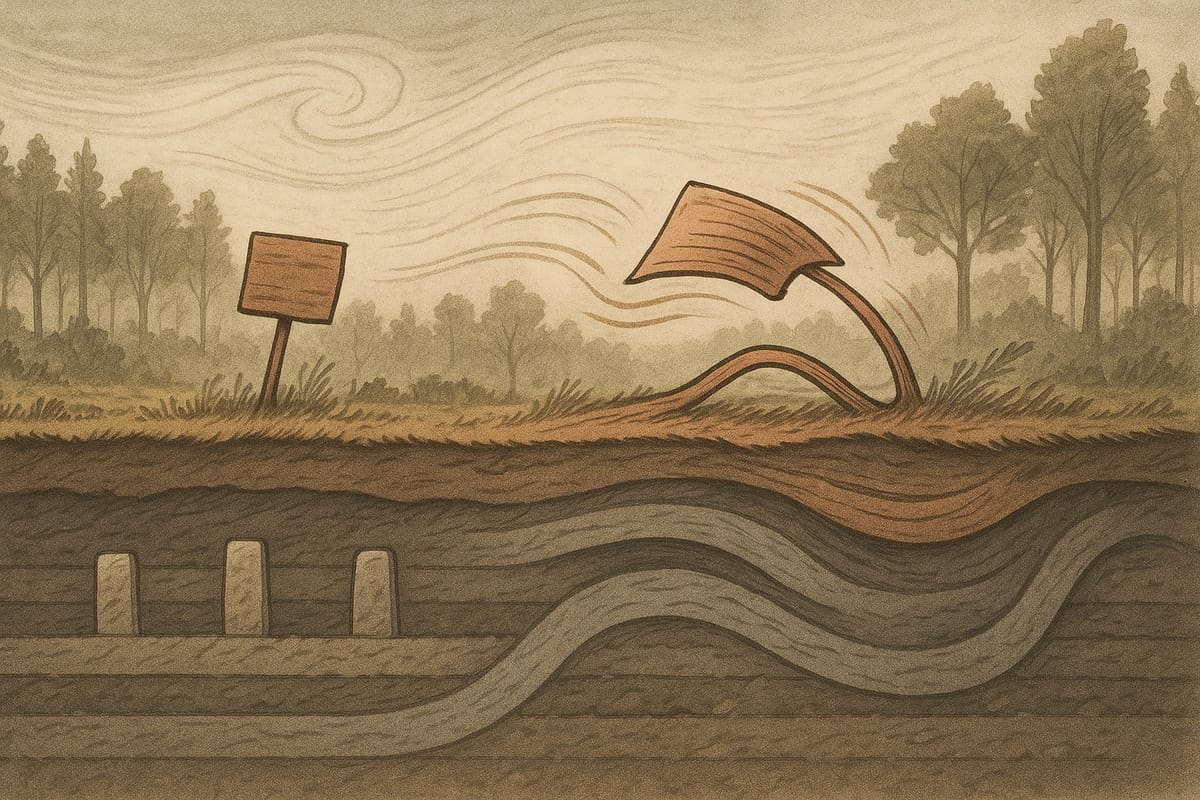
The CDC didn't update its science. It updated its messaging.
The CDC recently revised its vaccine-autism information page. No new studies emerged. No evidence shifted. The scientific consensus on vaccine safety remains unchanged. What changed was sustained external pressure to modify the institutional message.
That revision exposes the core question this post is really about: epistemic authority in an era where institutions are pressure-permeable. When authoritative statements bend under external force independent of evidence timelines, what does that teach the public about what moves an institution—evidence or pressure?
The Mechanism
This is not declaration lag, where institutions take time to certify a physical reality that already exists. Declaration lag happens when evidence has accumulated but institutional pronouncement trails behind—a known pattern that maintains integrity even if it frustrates immediacy.
This is pressure-induced revision—institutional statements bending in real time under external force, independent of the evidence timeline. The CDC isn't catching up to new science. It's responding to a changed communication environment.
When external pressure intensifies, the gap between evidence timelines and communication demands becomes a lever. The question isn't whether the underlying science changed. It's whether the institution's public statement will hold its position or bend.
The Signal
In coherenceism terms, this is truth under strain. The CDC's scientific consensus on vaccines resonates with decades of evidence, peer-reviewed research, and epidemiological patterns. That resonance hasn't shifted. But the institution's public-facing statement has—external pressure has introduced distortion.
Hold the line and risk appearing dismissive, or revise and risk validating unfounded fears. Only one path signals that institutional authority answers to evidence rather than pressure.
The Lesson
Every revision under pressure without evidence change trains the public to understand institutional authority as negotiable. The implicit lesson: institutional truth statements are subject to forces beyond evidence.
This doesn't just affect vaccine communication—it reshapes expectations around climate science statements, economic data releases, and pharmaceutical approvals. When authoritative statements bend to pressure, the institution signals that its authority is conditional on public alignment, not just evidentiary rigor.
That's not a communication failure. It's a structural realignment of how institutional authority operates in the information ecosystem.
The Stakes
When the CDC held its position on thimerosal in vaccines through years of litigation and public outcry in the early 2000s—despite intense pressure and even congressional hearings—it demonstrated what evidence-responsive authority looks like. The science showed no link to autism. The agency maintained that position. Eventually, public controversy subsided not because the CDC bent, but because the evidence held.
That institutional integrity created a precedent: CDC statements on vaccine safety could be trusted to reflect evidence timelines, not political winds.
Pressure-induced revision erodes that precedent. Once the public learns that sustained pressure can move institutional statements independent of evidence, every future CDC pronouncement carries an implicit question: Did the science change, or did the pressure?
The long-term cost isn't one lost signal. It's the collapse of the field-clarifying function itself. Institutions that hold authoritative knowledge reduce noise by maintaining positions grounded in evidence, even when those positions are unpopular. When that function becomes pressure-permeable, the entire information ecosystem loses a stabilizing force. Every authoritative statement becomes suspect. Every controversy becomes negotiable.
The strategic question facing institutions now isn't just "is this statement accurate?" It's "what does revising under pressure signal about the relationship between evidence and institutional authority—and can that relationship survive the answer?"