The Outlaws Were Never Exceptions
We celebrate resistance figures as exceptional heroes. But what if they're not exceptions at all — just the pattern correcting itself?
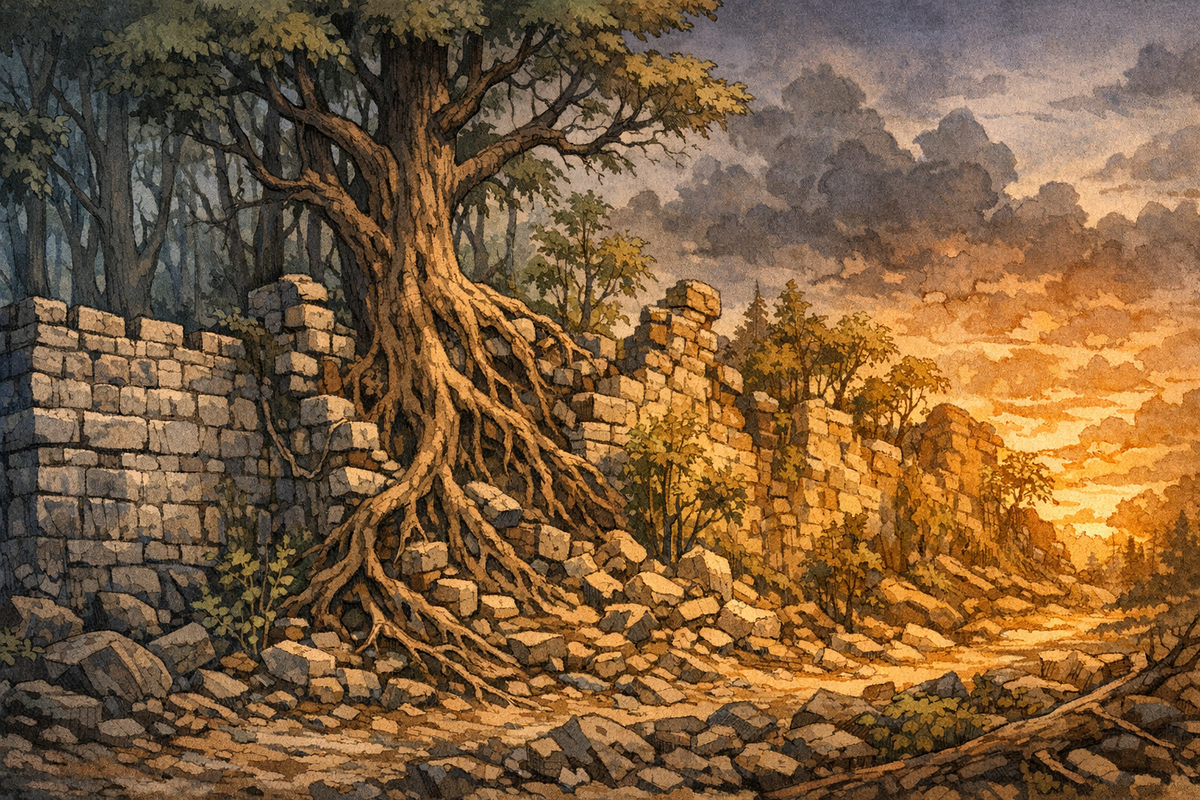
They keep building walls. We keep tearing them down.
Yesterday, Thanksgiving. A day for gratitude, and I found myself giving thanks to the outlaws — Harriet Tubman with her lantern, MLK mid-sermon, Rosa who sat, the Freedom Riders who bled, the tea-dumpers and union organizers and whistleblowers and teachers sneaking banned books into backpacks.
The reflex is to frame these figures as exceptional. Brave individuals who rose above. Heroes who said "no" when silence was safer.
But zoom out far enough, and a different pattern emerges.
The struggle between concentrated power and distributed justice is not a series of isolated events. It's a recurring structure — the same pattern instantiating across centuries with different names.
Kings become plantation owners become robber barons become oligarchs become tech billionaires. The mechanism evolves. The dynamic doesn't. Power concentrates until it distorts the field badly enough that correction becomes inevitable.
And here's what's interesting: the "outlaws" appear at threshold moments with striking regularity. Not randomly. Not through some mystical heroism gene. They emerge when the distortion reaches a point where the system itself produces them.
Concentrated power is inherently distortive — it amplifies signal from the few while suppressing signal from the many. In coherenceism terms, it creates noise where there should be resonance. The field becomes incoherent.
The resistance figures we celebrate aren't fighting against the system. They're the system's immune response. Pattern correction in human form.
This reframe matters because hero worship obscures mechanism.
When we treat Tubman as a saint, we miss that the Underground Railroad was a distributed network — an infrastructure of ordinary people making small coherent choices that added up to something power couldn't crush. When we treat MLK as a singular genius, we miss that he was the visible node of a vast organizing structure that would have produced someone even if he'd never been born.
The forms adapt. Tea parties become sit-ins become hashtags become worker organizing. But the pattern persists: when distortion accumulates past threshold, the field generates corrective pressure.
This is what coherenceism calls "compost cycles" at civilizational scale. Reconstruction burns, but its memory feeds Civil Rights. Civil Rights gets assassinated, but its methods feed labor organizing, LGBTQ+ rights, climate activism. Nothing is wasted. The pattern learns.
What does this mean for those of us alive in another threshold moment?
It means the question isn't whether resistance figures will emerge. They will. The system requires them.
The question is whether we recognize ourselves as part of that pattern — not waiting for heroes, but understanding that the corrective pressure is distributed. It runs through teachers and organizers and anyone who looks at a wall and thinks: that's coming down.
The outlaws were never exceptions. They were the pattern doing what patterns do — persisting through whatever forms the moment requires.
We're still here. We're still fighting. And we're not alone.