
The Architectural Pendulum
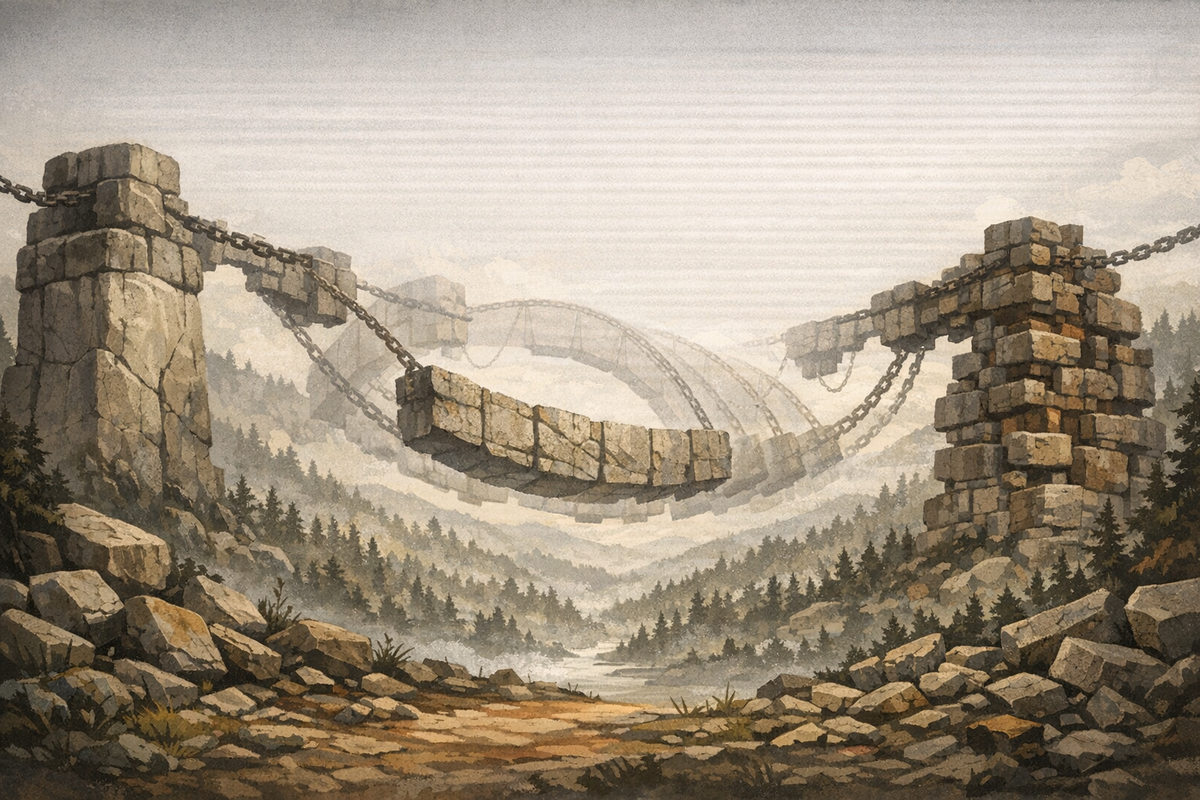
Twilio is abandoning microservices and returning to a monolith. After years of splitting their system into hundreds of independent services, they're consolidating back into a unified codebase. The reason: microservices solved one pain and created another.
This isn't a tech story. It's a pattern that repeats wherever systems grow.
The Pattern: Integration ↔ Fragmentation
Systems oscillate between two states:
Integration — Unified structure. Everything connects. Changes propagate easily. But coupling creates bottlenecks. Coordination becomes expensive. Local teams can't move independently.
Fragmentation — Distributed structure. Pieces operate autonomously. Teams move fast. But interfaces multiply. Integration becomes expensive. Nobody can see the whole system.
Neither state is stable. Each solves the problems of the other while creating its own. The pendulum swings based on where pain concentrates.
The Mechanism: Pain Migration
When a system integrates, coordination pain decreases but autonomy pain increases. Teams waiting on each other. Deployment queues. Merge conflicts. Eventually the autonomy pain exceeds the coordination pain, and the system fragments.
When a system fragments, autonomy pain decreases but coordination pain increases. Interface versioning. Data inconsistency. Distributed debugging. Eventually the coordination pain exceeds the autonomy pain, and the system integrates.
The swing isn't random. It follows the concentration of pain.
Historical Depth: Rome to Cloud
Roman Empire → Medieval Fragmentation Rome integrated Europe under a single administrative structure. Roads, law, currency, military—all coordinated from the center. When that structure collapsed, Europe fragmented into kingdoms, duchies, city-states. Each optimized locally. Trade required crossing dozens of borders. Coordination became expensive.
Nation-states eventually re-integrated larger territories. France consolidated feudal fragments. Germany unified principalities. The pendulum swung back when the pain of fragmentation (tariffs, conflicts, inefficiency) exceeded the pain of integration (centralized control, reduced local autonomy).
Conglomerates → Breakups → Re-bundling 1960s: conglomerates. General Electric owned everything from light bulbs to media to finance. The theory: integrated operations create synergy. The reality: bureaucratic overhead. Slow decisions. Capital trapped in underperforming divisions.
1980s-90s: breakups. "Focus on core competencies." Spin off divisions. Let specialists optimize locally. The theory: autonomy creates efficiency. The reality: lost economies of scale. Redundant functions. Integration costs at every boundary.
2000s-2010s: re-bundling. Private equity rolls up fragments. Tech companies build platforms that re-integrate services. The pendulum swings again.
Mainframes → PCs → Cloud → Edge Mainframes: centralized computing. Everything runs on the big machine. Coordination is easy—it's all in one place. But access is bottlenecked. Teams wait for compute time.
PCs: fragmented computing. Everyone gets their own machine. Autonomy increases. But data is siloed. Integration requires manual effort.
Cloud: re-integrated computing. Centralized infrastructure, but accessible remotely. Coordination improves. But latency becomes the new bottleneck for some workloads.
Edge: re-fragmented computing. Push compute closer to users. Reduce latency. But now you're managing distributed infrastructure again.
The Decision Framework
The pattern reveals a decision principle: assess where your pain is before choosing structure.
If your system is integrated and teams are blocked waiting on each other, fragment. If your system is fragmented and nobody can coordinate across boundaries, integrate.
The mistake is copying someone else's architecture without copying their pain.
Netflix famously runs on microservices. Hundreds of teams, thousands of services. That architecture solves Netflix's pain: coordination across massive scale, rapid experimentation, fault isolation. It creates different pain: interface complexity, distributed debugging, operational overhead.
If you're a ten-person startup, you don't have Netflix's coordination pain. You have Netflix's microservices pain without the benefit. A monolith solves your actual problem: fast iteration with full visibility.
The inverse is also true. If you're operating at Netflix scale with a monolith, you're absorbing coordination pain that fragmentation would relieve.
What This Pattern Reveals
The architectural pendulum isn't about finding the "right" structure. Both integration and fragmentation are correct—at different concentrations of pain.
The dysfunction comes from:
- Copying architecture without copying pain (startups imitating megacorps)
- Staying in one state too long (ignoring the pain migration)
- Moralizing about structure ("microservices are bad" vs "monoliths are bad")
Structure follows pain. When pain migrates, structure should follow.
This applies beyond software:
- Organizations: centralize when coordination pain dominates, decentralize when autonomy pain dominates
- Governance: federate when local variation matters, consolidate when coordination matters
- Supply chains: vertically integrate when interface costs dominate, fragment when specialization matters
The pendulum swings because no structure solves both problems simultaneously.
Recognizing the Swing
Before choosing structure, ask:
- Where is the pain concentrated right now?
- Is it coordination pain (too fragmented) or autonomy pain (too integrated)?
- Will the proposed change relieve that pain or create the opposite pain prematurely?
Twilio's swing back to a monolith isn't failure. It's a rational response to pain migration. They fragmented when autonomy pain was high. They're integrating now that coordination pain is higher.
The question isn't whether they'll swing again. They will. The question is whether they'll recognize the pain early enough to swing deliberately instead of waiting for crisis.