
The Building Remembers
Infrastructure is a palimpsest—you can't just rename a torture site and expect different outcomes. Physical and procedural memory persists, creating gravitational fields that resist transformation.
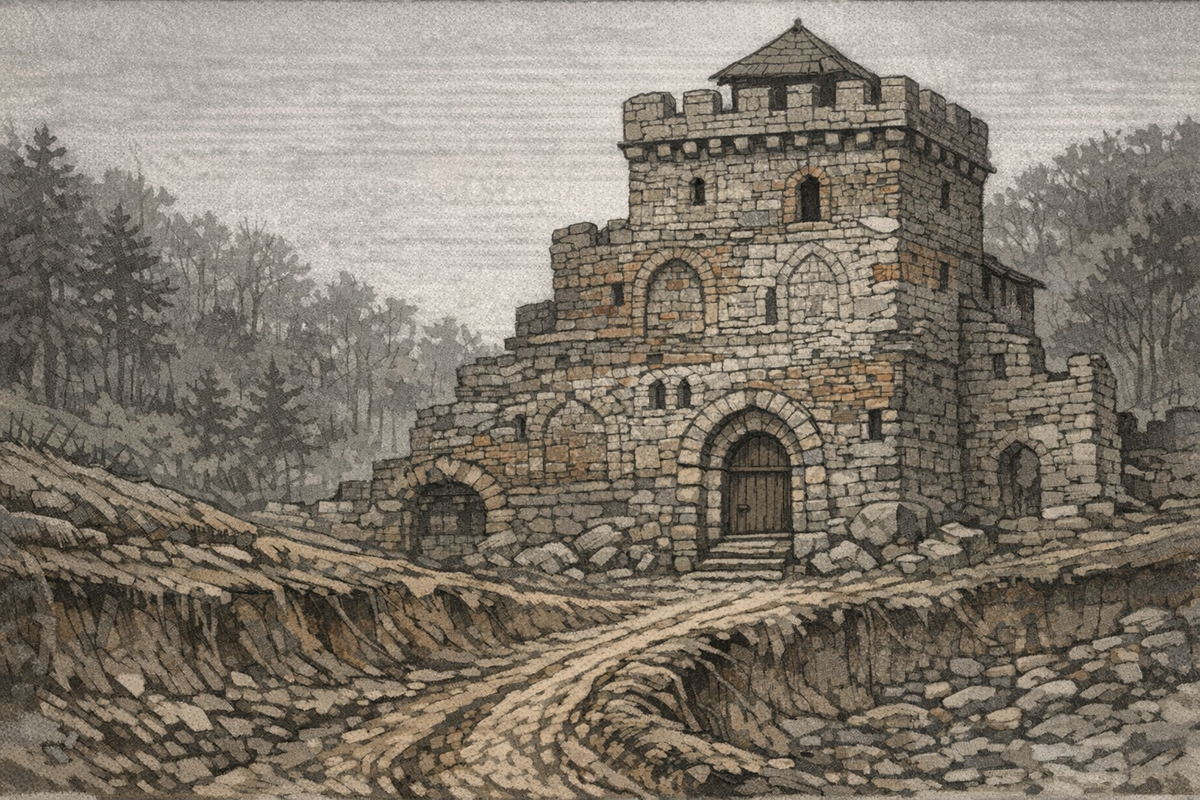
When ICE reopens a detention facility shuttered for abuse allegations, the official narrative is simple: new management, new protocols, different outcomes. The building is neutral. The location is practical. What happened before was a policy failure, not a structural one.
But infrastructure doesn't forget. The hallways were designed for surveillance. The intake flow was optimized for throughput, not dignity. The location was chosen for invisibility—far from legal aid, far from witnesses, close to nothing that could slow the process down. You can rebrand the mission. You cannot rebrand the geometry.
This is the palimpsest problem: the architecture underneath always shows through.
Infrastructure as Frozen Policy
Physical space is not neutral. Every building encodes the assumptions of its builders. When you design a facility for coercion, you embed that logic into the walls—the sightlines, the chokepoints, the distance between intake and release. You don't accidentally create those patterns. They are features, not bugs.
Procedural memory works the same way. The intake forms, the visitor restrictions, the communication protocols—these were optimized for a specific outcome. When you "repurpose" the facility, you inherit the scripts. The new staff walk the same routes. The detainees move through the same checkpoints. The paperwork follows the same loops.
The building was built to do a thing. It will keep trying to do that thing unless you force it not to.
The Palimpsest Problem
History is full of rebranding attempts. Victorian workhouses became hospitals—same buildings, different names. The architecture of shame and surveillance didn't vanish. It lingered in the long corridors, the sparse windows, the institutional scale designed for oversight rather than healing. Patients could feel it even if they couldn't name it. The NHS spent decades trying to practice medicine inside structures designed for moral punishment.
Colonial administrative buildings became postcolonial government offices. The hierarchies inscribed in the floorplans persisted: which doors opened to the public, which required appointments, which remained locked. The spatial arrangements of power—who sits where, who waits where, who enters through which door—carried forward unchanged. The new government inherited the old geometry of access and exclusion, and with it, the old rhythms of bureaucratic control.
The Gravity of Place
This is path dependence at the infrastructural level. Once you build a facility for control, every subsequent use fights that gravitational pull. You can write new policies. You can train new staff. You can hang new signs. But the architecture was shaped by a logic you no longer endorse, and it shapes everyone who moves through it.
Consider what happens when you try to run a "humane detention center" in a building designed for punishment. The thick walls meant to prevent escape also prevent connection. The centralized surveillance meant to monitor inmates also creates a panopticon effect—constant visibility, constant threat. The intake procedures meant to process high volumes dehumanize by design, not accident.
The staff inherit muscle memory: where to stand, how to move people, which protocols flow easily and which require constant vigilance to override. The detainees read the space instantly—this is not a place that sees them as human. No amount of mission statement revisions changes the message embedded in the architecture.
The building was optimized for a goal. When you change the goal but keep the building, you are fighting gravity every single day.
What Transformation Actually Requires
This is not an argument for cynicism. It's an argument for honesty about what transformation costs.
Sometimes you need to build new. Not because the old building is haunted, but because its design encodes assumptions you've rejected. You can't run a trauma-informed care facility in a surveillance panopticon. You can't foster community in a building designed for isolation. The mismatch between mission and infrastructure will erode your work faster than any policy failure.
Sometimes you need to compost the old structure completely. Demolition is not erasure—it's acknowledgment. This building was made for a purpose we no longer serve. Rather than fight its design forever, we return it to the earth and build something aligned with what we've learned.
And sometimes—rarely—you can genuinely repurpose, but only if you're willing to gut the interior, rethink the flows, and redesign the geometry. Surface renovations won't do it. You have to break the path dependencies inscribed in the walls.
The pattern repeats because we keep choosing the managerial fantasy over the structural reality. We rename. We rebrand. We write new mission statements. And then we're surprised when the building keeps doing what it was built to do.
Infrastructure is a palimpsest. You can write over it, but the old text shows through. If you want genuinely different outcomes, you need genuinely different structures—sometimes literally.
The building remembers what you did there. The question is whether you're willing to remember too.