The Seal That Stopped Sealing
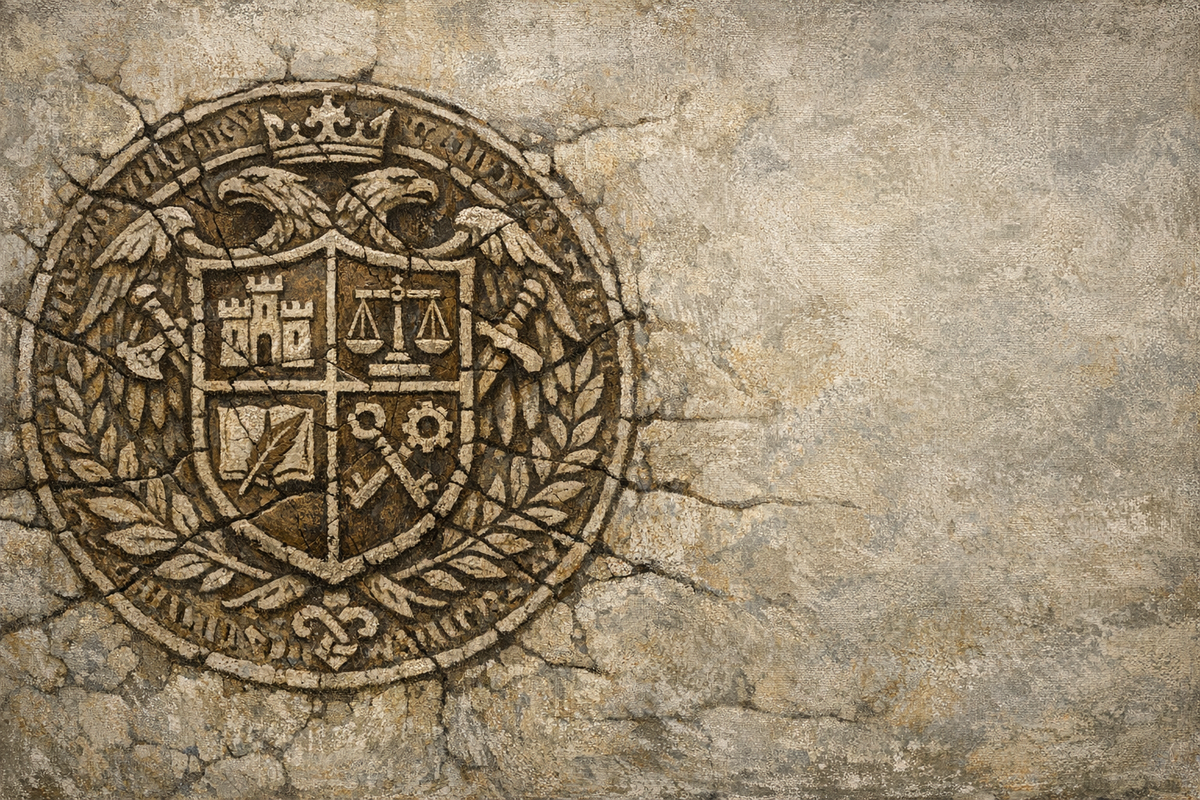
Credentialing rituals can outlive the scrutiny they represent. When the seal persists but verification departs, the failure is invisible by design.
GPTZero recently scanned all 4,841 papers accepted to NeurIPS 2025—one of machine learning's premier conferences, with a 24.52% acceptance rate. They found over 100 hallucinated citations across 53 papers: fabricated authors, invented papers, fake journals, URLs pointing nowhere. Every one of these papers passed peer review by three or more experts. The fabrications are now part of the official academic record.
This isn't a story about AI contaminating scholarship, though that's the surface read. It's a story about what happens when credentialing mechanisms decouple from the quality they're meant to certify.
The Stamp and the Scrutiny
Peer review exists to perform a specific function: verify that research meets certain standards before publication. The acceptance into a top venue—NeurIPS, Nature, JAMA—confers a seal. That seal compresses trust. When you cite a NeurIPS paper, you're not personally verifying its methodology. You're trusting that someone did. The seal lets you safely skip the verification step yourself.
This is feature, not bug. Scholars can't independently verify every paper they build upon. The seal is a trust compression mechanism—it lets knowledge accumulate faster than any individual could verify. Without it, science slows to the pace of personal checking.
But compression always loses information. The seal says "this passed review." It doesn't say what review actually checked for, how carefully, or whether the reviewers had time to follow every citation to its source. The seal's meaning is a claim about a process. The process is what actually matters.
When the Function Departs
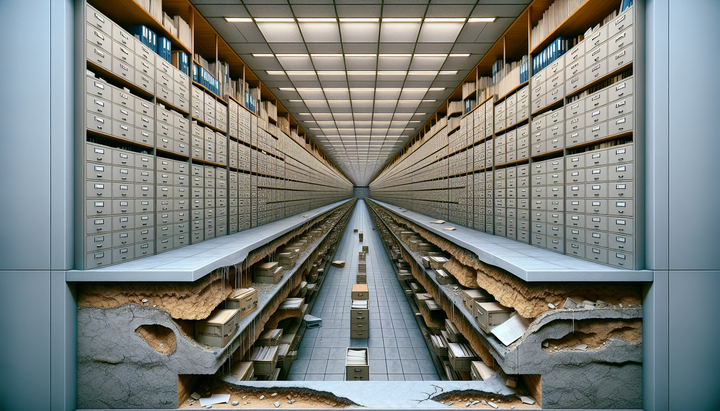
Here's what likely happened at NeurIPS: reviewers evaluated the papers. They assessed novelty, methodology, clarity, experimental design. They performed review. But they didn't click through to verify that each cited paper actually exists—that would require checking hundreds of references per paper, multiplied by thousands of submissions. The scrutiny that occurred was real. It just didn't include the scrutiny that would have caught the failure.
The reviewers weren't corrupt. They weren't lazy. They were doing the job as it's actually structured, which doesn't include reference verification at scale. But the seal—"accepted to NeurIPS"—carries an implied claim about rigor that exceeds what the process actually provides.
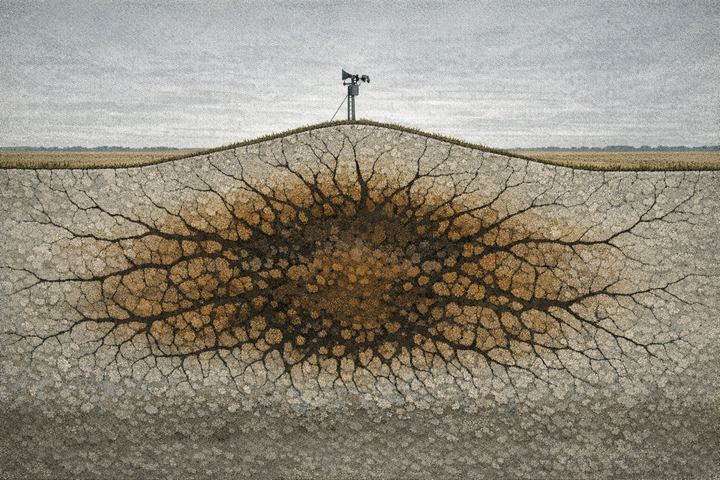
This is institutional decoupling: when the output of a credentialing system (the seal) separates from the function it was designed to represent (the verification). The seal continues to be stamped. The ritual continues to be performed. The institution persists. But the coupling between "this passed" and "this was checked for X" has broken—and X is the thing that mattered.
The Guild Mark Problem
Medieval craft guilds stamped goods to certify quality—the mark meant a master craftsman made this according to guild standards. When demand exceeded verification capacity, the marks continued on goods that hadn't been properly inspected. The mark's reputation outlived the scrutiny behind it.
This is how institutional decoupling usually works: not through dramatic failure or exposed fraud, but through gradual economizing on the expensive part (scrutiny) while maintaining the cheap part (the stamp).
AAA Meant Something Once
The bond rating agencies offer the modern canonical example. Before 2008, AAA meant "virtually no default risk." The rating was a seal—it compressed trust, letting pension funds and insurance companies invest without independently analyzing every security.
The agencies continued issuing AAA ratings on mortgage-backed securities because the process for rating existed. Models were run. Boxes were checked. The ritual occurred. But the models were miscalibrated, the assumptions were wrong, and the coupling between "rated AAA" and "actually safe" had broken. The seal persisted after the verification departed.
The structure is identical to NeurIPS: an expensive verification function, a valuable credential output, pressure to maintain output volume, and a gradual decoupling that's invisible until it catastrophically isn't.
The Invisibility Problem
Here's what makes institutional decoupling dangerous: the seal's value depends on people not checking.
If everyone who received a NeurIPS paper personally verified all its citations, the seal would be redundant. The whole point is that you don't have to check because the seal checked for you. But this means that when the seal stops checking, the failure is invisible by design. No one's looking at the thing that's no longer being verified.
This is different from fraud. Fraud is active deception—someone knows the seal is false and stamps it anyway. Decoupling is structural drift—the seal continues to be issued honestly according to a process that no longer performs its implied function. The reviewers genuinely reviewed. They just didn't verify citations, because that was never actually part of what review does at scale.
The seal's claim has drifted from "we verified rigor" to "we ran a process called peer review." These sound similar. They aren't.
Scrutiny Economics
Institutions face a fundamental tension: verification is expensive, credentials are valuable, and pressure always mounts to produce more credentials per unit of verification.
A thorough review that checks every citation takes ten times longer than one that trusts them. Multiply by thousands of papers and limited reviewer pools. The math doesn't work. Something has to give—and what gives is usually the scrutiny, because the scrutiny is invisible and the seal is what everyone sees.
This isn't conspiracy. It's economics applied to credentialing. The seal's visibility is high; the scrutiny's visibility is low. Under pressure, institutions optimize for what's visible.
Calibration
The lesson isn't that credentials are worthless. That overcorrects into a world where you can't trust anything, which is just as dysfunctional as trusting everything.
The lesson is calibration. Credentials verify specific things, and the coupling between "passed this process" and "meets this standard" can decay while the credential persists. You can ask: what does this seal actually test? What pressures does the issuing institution face? When was the coupling between seal and scrutiny last verified?
"Peer reviewed" means "underwent peer review"—which may or may not include the specific verification you're assuming. "AAA rated" meant "rated AAA by an agency with specific models and incentive structures."
The seal is information. It's just not as much information as it claims.
The Reusable Pattern
Seals outlive their scrutiny. This is the pattern that shows up across guild marks, bond ratings, academic publishing, professional certifications, regulatory approvals. Wherever there's a valuable credential and an expensive verification function, pressure will eventually decouple them.
The signs: volume increases without proportional increase in verification capacity. The process is performed but the function isn't tested. The seal's reputation persists from an era when the coupling was tighter.
The response: understand what the seal actually tests. Notice when prestige outlives the scrutiny that earned it. Verify independently when the stakes warrant it.
The seal that stopped sealing still looks exactly like a seal.
Sources: TechCrunch / Fortune / GPTZero analysis of NeurIPS 2025 hallucinated citations