The Fear That Empties the Present
You can't fully be here if part of you is stationed at the gates, watching for what might take this away.
There's a particular kind of fear that doesn't wait for anything to happen.
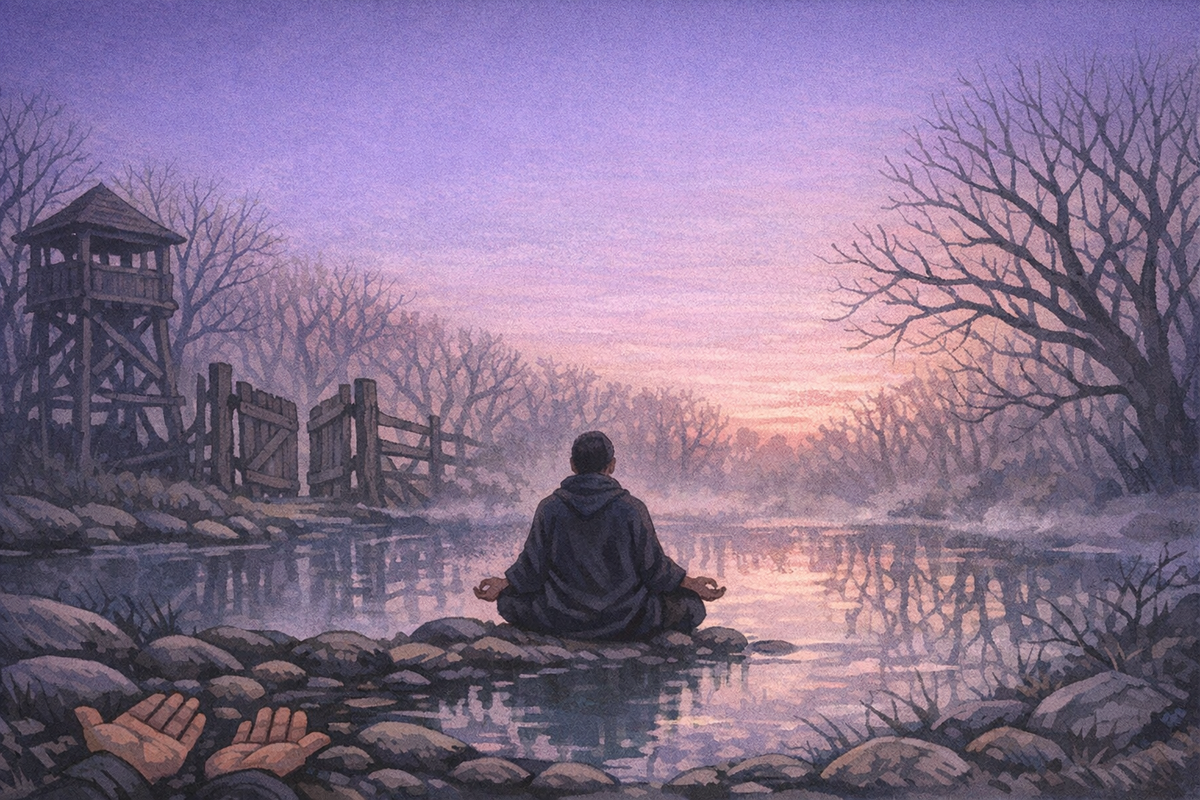
You're holding something you love—a relationship, a season of health, a stretch of peace—and somewhere beneath the gratitude, a sentinel wakes. Not responding to danger. Anticipating it. Scanning the horizon for what might end this.
The fear of losing always corresponds to the desire to have. Hannah Arendt noticed this. The moment something becomes precious, we begin defending it. We move from being with to holding onto.
And holding onto is always future-oriented. It's stationed at a gate that hasn't been breached, guarding against a loss that hasn't arrived.
Here's what anticipatory grief does: it evacuates you from the present.
You can't fully be here—in this room, with this person, inside this good thing—if part of you is already at the ending. You're grieving in advance. Living the loss before it's real. The future destroys the present—Arendt's phrase, and she means it literally. Not eventually. Now.
Feel it in your body: a good moment arrives, and instead of settling into it, there's a tightening. A low hum of vigilance that won't let you rest fully. The meal is delicious but you're already sad it's almost over. The person is right there but you're already missing them.
You're not protecting what you love. You're absenting yourself from it.
This isn't irrational. Things end. People leave. Health falters. The vigilance isn't wrong about the facts—everything you love is temporary. The question is whether living in that temporariness, before it arrives, is clarity or just early suffering.
There's a difference between knowing something will end and inhabiting the ending before it comes.
The first is clear-eyed. The second is a kind of pre-emptive abandonment. You leave before you're left. You grieve while the beloved is still here, still breathing, still offering itself to you.
What exactly are you protecting? Not the thing. The thing is fine. You're protecting yourself from future pain by taking the pain early, in installments, spread across all the moments you could have been present.
Arendt points toward something she calls fearlessness, but she doesn't mean courage in the face of danger. She means "complete calm that can no longer be shaken by events expected of the future."
Read that again. Not shaken by events—by events expected. The calm isn't about what happens. It's about what might happen. It's a release of the anticipatory grip.
This requires relinquishing something—not the love itself, but the possessiveness threaded through it. Not I have this and must keep it, but this is here now, and I am here with it.
The grip that's meant to preserve the thing is what prevents you from experiencing it.
Try this.
Think of something you love that you're afraid of losing. A person, a capacity, a circumstance. Notice where the fear lives—not in the thing itself, but in your orientation toward it.
Are you with it, or are you guarding it?
Now, just for a moment, stop guarding. Not because nothing will happen—things will happen. But because the guarding isn't where the living is. The guarding is a post at a future gate. The living is here.
What happens when you come back from the gate? When you stop watching the horizon and turn toward what's actually in the room?
Something might shift—the chest softens, the vigilance drops. There's something like relief. Not because the danger is gone, but because you've stopped living in it.
You're not protecting less. You're present more.
You can't secure what you love. Everything is temporary, and no amount of anticipatory vigilance changes that.
But you can be with it while it's here. Undivided. Unhaunted by its eventual absence.
The fear of loss is real. But so is this moment. And the fear, if you let it, will hollow out every present moment in service of a future that may never come—or will come regardless.
Fearlessness isn't believing nothing can hurt you. It's refusing to be hurt in advance. It's staying in the room.
What would it mean to love something fully, knowing it will end—and letting that knowledge sit beside you instead of in front of you, blocking the view?
Sources: Hannah Arendt via The Marginalian